
Understanding trailer weight ratings isn’t just about following regulations—it’s about protecting your investment, ensuring your safety, and avoiding costly fines or accidents on Timmins roads. Whether you’re hauling equipment to a job site on Highway 101, transporting materials through Porcupine, or making a delivery run to South Porcupine, knowing your trailer’s weight limits is essential for safe and legal operation.
For Timmins residents shopping for a cargo trailer, utility trailer, or dump trailer, understanding these weight ratings helps you select the right trailer for your specific needs while ensuring compliance with Ontario’s strict trailer regulations.
Why Weight Ratings Matter in Timmins
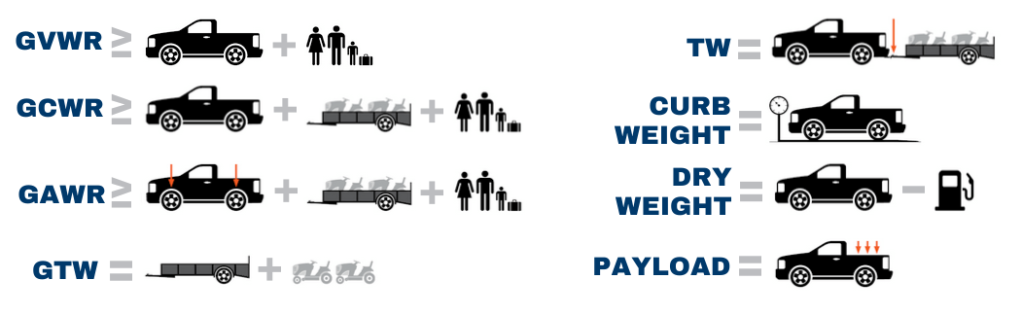
Timmins’ unique geography and economy create specific challenges for trailer users. The city’s position as a regional hub means many residents haul equipment between job sites, transport mining supplies, or move materials for construction and forestry operations. The rural roads connecting Timmins to surrounding communities can be challenging, especially during spring thaw or winter conditions, making proper weight distribution and capacity even more critical.
Ontario’s Ministry of Transportation enforces strict weight regulations, and understanding your trailer’s ratings helps you avoid violations that can result in fines ranging from $200 to $20,000, depending on the severity of the overweight violation. Beyond legal compliance, operating within your trailer’s weight ratings prevents premature wear, brake failure, tire blowouts, and accidents that could endanger you and other motorists on Timmins roads.
GVWR: Gross Vehicle Weight Rating Explained
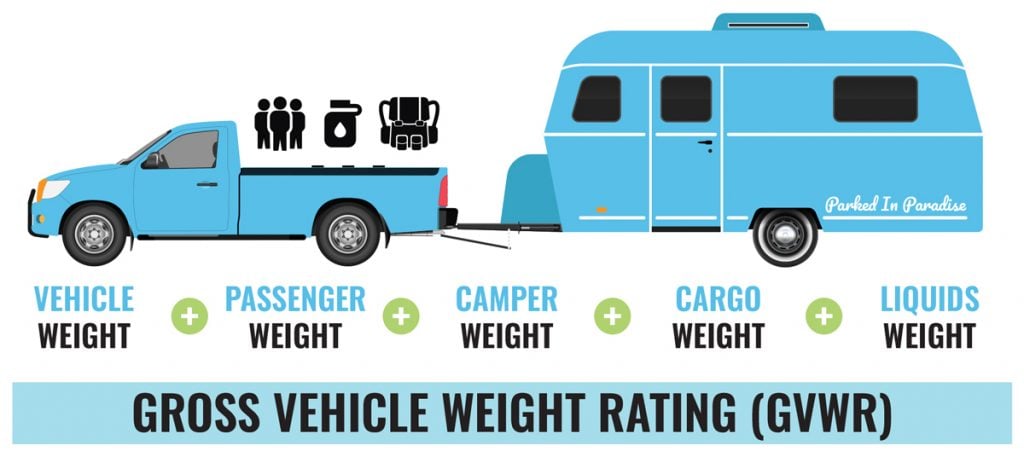
The Gross Vehicle Weight Rating (GVWR) represents the maximum total weight your trailer is designed to carry safely. This includes the weight of the trailer itself (the empty or “curb” weight) plus the maximum payload it can safely transport. Think of GVWR as the absolute ceiling—the number you can never exceed.
For example, if you’re looking at a utility trailer with a GVWR of 7,000 pounds and an empty weight of 1,800 pounds, your maximum payload capacity is 5,200 pounds. Exceeding this rating compromises the trailer’s structural integrity, overwhelms the suspension system, and can lead to catastrophic brake failure.
When shopping for trailers in Timmins, always consider not just your typical loads but also your maximum anticipated loads. That cargo trailer that seems perfect for your landscaping business needs enough GVWR capacity to handle spring’s heaviest soil and mulch deliveries, not just your average weekly loads.
How GVWR Affects Your Towing Vehicle
Your trailer’s GVWR must align with your towing vehicle’s capabilities. Check your truck or SUV’s maximum towing capacity—this should exceed your trailer’s GVWR. Many Timmins residents use half-ton pickups for towing, which typically have maximum towing capacities between 7,000 and 13,000 pounds, depending on the configuration and model year.
Remember that your vehicle’s payload capacity also factors into the equation. The tongue weight of your trailer (typically 10-15% of the loaded trailer weight) counts against your vehicle’s payload capacity. A loaded dump trailer at maximum GVWR might have 700-1,000 pounds of tongue weight, which must be added to any cargo inside your towing vehicle and passengers.
GAWR: Gross Axle Weight Rating Demystified
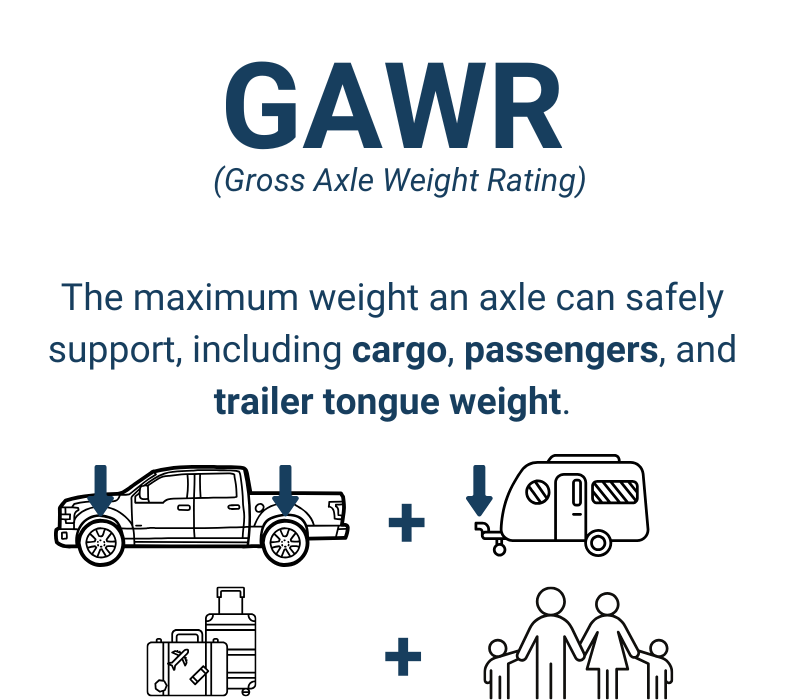
While GVWR tells you the maximum total weight, Gross Axle Weight Rating (GAWR) specifies the maximum weight each axle can support individually. Trailers may have different GAWR values for each axle, and understanding these ratings is crucial for proper load distribution.
A tandem-axle utility trailer might have a GVWR of 14,000 pounds with each axle rated at 7,000 pounds GAWR. This means you could theoretically load 7,000 pounds on the front portion supported by the front axle and another 7,000 pounds on the rear. However, improper distribution—such as placing 10,000 pounds over one axle and 4,000 over the other—exceeds the GAWR of the overloaded axle even though you’re under the total GVWR.
Practical GAWR Considerations for Timmins Applications
Load distribution becomes especially important when hauling dense materials common in Timmins industries. Mining equipment, forestry machinery, and construction supplies often have concentrated weight. When loading your trailer, spread weight as evenly as possible across the deck, keeping it centered between the axles.
For cargo trailers, distributing weight front-to-back is equally important. Loading too much weight toward the rear reduces tongue weight below safe levels, causing trailer sway—particularly dangerous on Highway 655 or during windy conditions common in the region. Conversely, too much forward weight creates excessive tongue weight that overloads your vehicle’s rear axle.
Payload Capacity: Your Real Working Limit
Payload capacity is perhaps the most practical number for daily trailer use. It represents the actual weight of cargo you can load into your trailer and is calculated by subtracting the trailer’s empty weight from its GVWR. This is your real working capacity—the number you’ll reference every time you load up.
For Timmins businesses, accurately calculating payload capacity prevents overloading during routine operations. A landscaping company using a dump trailer needs to know exactly how many cubic yards of topsoil, gravel, or mulch they can safely haul. Construction contractors must calculate whether their utility trailer can handle that load of steel roofing or concrete blocks in a single trip.
Calculating Real-World Payload
Many trailer owners forget to account for accessories and modifications when calculating available payload. That toolbox you installed on your cargo trailer? It reduces available payload. The spare tire carrier, upgraded ramps, side rails, and any other additions all count against your capacity.
Create a realistic baseline by weighing your trailer fully equipped with all accessories and typical fuel levels if it has a hydraulic system. Subtract this actual weight from GVWR to determine your true available payload. This approach prevents the gradual payload creep that occurs when accessories are added over time without reconsidering capacity.
Ontario-Specific Regulations and Requirements
Ontario has specific requirements for trailer operation that Timmins users must understand. Trailers with a GVWR over 4,600 kg (10,141 pounds) require the towing vehicle to have a Commercial Vehicle Operator’s Registration (CVOR) if used for commercial purposes. This affects many dump trailers and larger utility trailers commonly used in construction and resource industries.
Weight distribution requirements in Ontario mandate proper tongue weight between 10-15% of total trailer weight. Too little tongue weight causes dangerous sway; too much overloads your vehicle’s rear axle. When traveling between Timmins and other communities, you may encounter commercial vehicle inspection stations where weight compliance can be verified.
Seasonal Considerations in Timmins
Northern Ontario’s distinct seasons create unique weight rating challenges. Winter operations add weight through snow and ice accumulation—an often-overlooked factor that can push you over capacity limits. A cargo trailer that operates safely at capacity in summer may be overweight when covered in snow and ice.
Spring thaw creates perhaps the greatest challenge. Ontario’s seasonal weight restrictions, sometimes called “spring weight restrictions,” reduce allowable axle weights on many roads during thaw periods to prevent road damage. These restrictions typically run from March through May in the Timmins area, and violating them results in significant fines. Check the Ontario Ministry of Transportation’s seasonal restrictions before hauling heavy loads during these months.
Weighing Your Trailer: Best Practices
The only way to truly know your trailer’s loaded weight is to weigh it. Several options exist for Timmins residents:
Public Scales: Commercial truck scales at facilities around Timmins can weigh your loaded trailer. This provides the most accurate total weight reading.
Axle Scales: Portable axle scales allow you to weigh each axle individually, helping identify distribution problems. These are particularly valuable for ensuring GAWR compliance.
CAT Scales: Available at some truck stops, CAT scales provide certified weights useful for compliance documentation.
For best results, weigh your trailer in the configuration you’ll actually use—loaded with typical cargo, all accessories installed, and connected to your towing vehicle to check tongue weight distribution.
Consequences of Exceeding Weight Ratings
Operating beyond weight ratings carries serious consequences. Structurally, overloading stresses the frame, potentially causing cracks or failures that may not be immediately apparent. Suspension components wear prematurely, and brakes become inadequate for the actual weight, dramatically increasing stopping distances—critical on winter roads or when navigating Timmins’ hills.
Tire failure becomes significantly more likely when operating beyond weight ratings. An overloaded tire generates excessive heat, leading to blowouts that can cause loss of control. In northern Ontario’s remote areas, a tire failure from overloading could leave you stranded far from assistance.
Insurance complications represent another risk. If an accident occurs while operating an overloaded trailer, insurance companies may deny claims based on negligent operation. This could leave you personally liable for damages, injuries, or losses.
Choosing the Right Trailer for Your Needs
Understanding weight ratings helps you select the appropriate trailer from the start. Consider these factors when shopping:
Usage Patterns: If you regularly haul near capacity, choose a trailer with GVWR that provides a safety margin above your typical loads. A utility trailer rated for 10,000 pounds works better for 7,000-pound loads than a 7,000-pound rated trailer maxed out regularly.
Material Density: Timmins industries often handle dense materials. A dump trailer sized by volume alone may not have adequate weight capacity for materials like gravel, which weighs approximately 3,000 pounds per cubic yard.
Future Needs: Anticipate how your hauling requirements might evolve. Growing businesses often find their initial trailer inadequate within a few years. Buying appropriate capacity initially costs less than replacing an undersized trailer later.
Towing Vehicle Matching: Ensure your truck or SUV can safely handle your trailer choice. A cargo trailer with 14,000-pound GVWR requires a properly equipped tow vehicle—likely a three-quarter or one-ton truck for safe, legal operation.
Upgrading Components Within Weight Ratings
Some trailer owners consider upgrading components like tires, springs, or axles to increase capacity. While tempting, this approach requires extreme caution. Simply installing higher-rated tires doesn’t increase your trailer’s GVWR—the frame, coupler, and other components remain limited to their original ratings.
Legitimate capacity increases require comprehensive upgrades certified by the manufacturer or a qualified engineer. In Ontario, modified trailers may require inspection and re-certification. The cost and complexity of proper upgrades often make purchasing an appropriately rated trailer more practical.
Maintenance and Weight Rating Preservation
Proper maintenance ensures your trailer continues meeting its weight ratings safely. Regularly inspect the frame for cracks, especially near welds and stress points. Check suspension components for wear—worn springs reduce effective capacity and create unsafe handling. Verify that brakes function properly, as brake capacity directly relates to safe operation at maximum weights.
Tire maintenance deserves particular attention. Maintain proper inflation pressures, which increase with load. Check sidewalls for the maximum cold pressure rating and load range. Replace tires showing wear, damage, or age-related deterioration regardless of tread depth.
Conclusion: Knowledge Equals Safety and Compliance
For Timmins residents, understanding GVWR, GAWR, and payload capacity transforms trailer operation from guesswork into informed, safe practice. Whether you’re hauling supplies to mining operations, transporting equipment between forestry sites, or moving materials for construction projects, operating within weight ratings protects your investment, ensures legal compliance, and most importantly, keeps you and other road users safe.
Take time to understand your cargo trailer, utility trailer, or dump trailer weight ratings before your first haul. Calculate your actual payload capacity, account for accessories and seasonal factors, and commit to operating within these limits. The few minutes invested in understanding these numbers prevent hours of roadside delays, thousands in fines or repairs, and potential tragedy from overloaded equipment failure.
Smart trailer operation in Timmins means respecting weight ratings as the safety limits they represent, not suggestions to be tested. Your trailer, your vehicle, and everyone sharing northern Ontario’s roads will benefit from your informed, responsible approach to weight management.